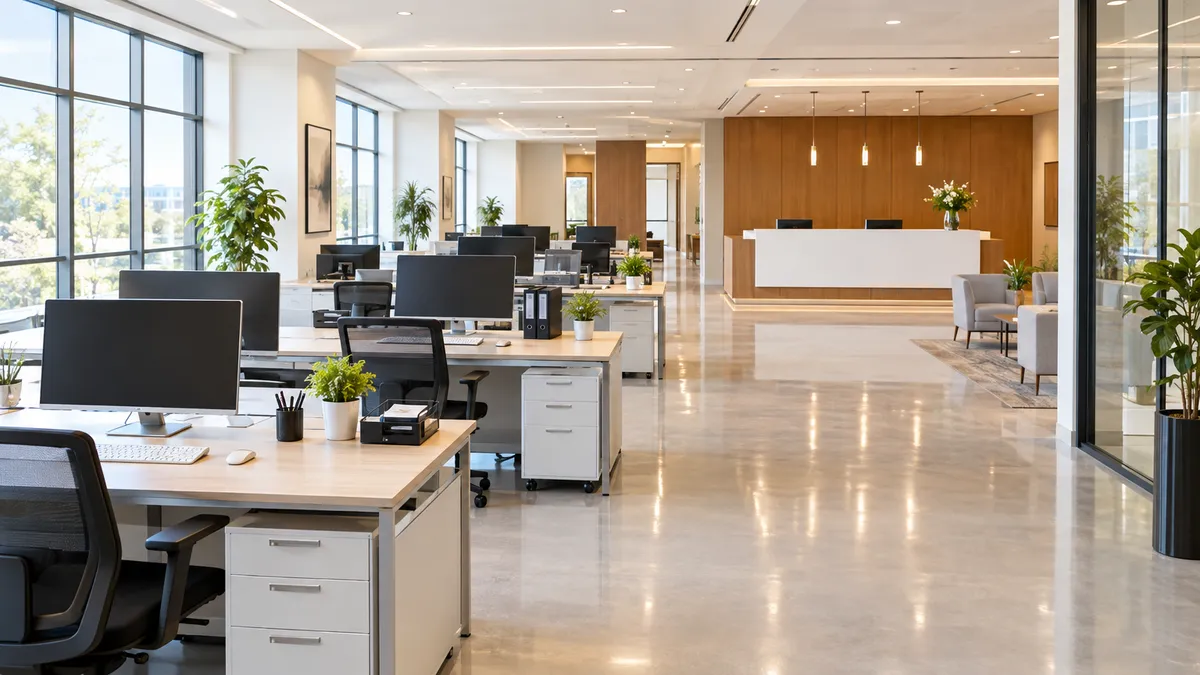
A clean office doesn't just look professional — it affects how your team works, how clients perceive your business, and how often people get sick. The question most office managers and business owners struggle with isn't whether to clean professionally, it's how often.
There's no single answer that fits every workplace. The right cleaning schedule depends on your office size, how many people work there, the nature of your business, and how often clients or visitors come through. This guide breaks it down so you can make a confident, practical decision.
Why Cleaning Frequency Matters More Than You Think
Many offices operate on a cleaning schedule that was set up years ago and never revisited. Meanwhile, the team has grown, foot traffic has increased, or the business has expanded into new spaces — and the cleaning routine hasn't kept up.
An office that isn't cleaned often enough tends to accumulate dust on desks and vents, build up grime in restrooms and break rooms, and become a breeding ground for germs on high-touch surfaces like door handles, keyboards, light switches, and shared equipment. These aren't just aesthetic problems. Studies consistently show that dirty workplaces contribute to higher employee sick days, lower morale, and a less favorable impression on clients and visitors.
On the flip side, cleaning more often than necessary isn't always the answer either. A thoughtful schedule — matched to your actual office needs — keeps your space clean without overspending.
General Cleaning Frequency Guidelines by Office Type
Small Offices (1–10 People, Low Foot Traffic)
Smaller offices with a tight-knit team and minimal outside visitors can often get by with professional cleaning once or twice per week. Day-to-day tidying by staff — emptying trash, wiping desks — can supplement between visits.
However, even small offices benefit from regular professional attention to restrooms, kitchen or break room areas, floors, and common surfaces. These areas accumulate bacteria quickly, regardless of how small the team is.
Recommended frequency: 1–2 times per week
Mid-Size Offices (11–50 People, Moderate Traffic)
As team size grows and more people cycle through the space each day, cleaning needs increase significantly. Restrooms get heavier use, break rooms become messier more quickly, and shared surfaces like conference tables, copiers, and reception areas see far more contact.
Offices in this range typically need professional cleaning at least two to three times per week to stay consistently presentable and hygienic. If your office hosts regular client meetings or operates in a healthcare-adjacent, food, or childcare environment, daily cleaning is worth considering.
Recommended frequency: 2–3 times per week, or daily for client-facing or higher-sensitivity environments
Larger Offices and Commercial Spaces (50+ People or High Daily Foot Traffic)
Larger teams, busy lobbies, and high-traffic commercial spaces — like coworking spaces, medical offices, retail back offices, or multi-tenant office buildings — generally require daily professional cleaning as a baseline. Some areas within these spaces, like public restrooms or reception zones, may need attention multiple times throughout the day.
Daily cleaning at this scale isn't a luxury — it's what keeps the space functional, welcoming, and up to a standard your employees and clients expect.
Recommended frequency: Daily, with periodic deep cleaning on a monthly or quarterly rotation
The Areas That Drive Your Cleaning Schedule
Frequency isn't just about how many people are in the office — it's also about which areas get the most use. Some spaces within an office need more attention than others, regardless of size.
Restrooms
Restrooms are the number-one priority. Even in a small office, restrooms should be professionally cleaned and sanitized at minimum twice a week — ideally more. Germs spread quickly in restroom environments, and a dirty restroom reflects poorly on the entire business.
Break Rooms and Kitchens
Break rooms accumulate food residue, spills, and bacteria fast. Countertops, sinks, microwave interiors, and refrigerator handles should be cleaned regularly. A professional clean two to three times per week — or daily in larger offices — keeps these spaces sanitary and pleasant.
Reception and Waiting Areas
These are the first spaces clients and visitors see. Dust, scuffs, smudges, and clutter in a reception area send the wrong message before a conversation even begins. High-traffic reception areas benefit from cleaning at least every other day.
Conference Rooms
Conference rooms that host frequent meetings — with multiple people touching surfaces, using equipment, and moving furniture — should be cleaned after every meeting day. In offices where conference rooms are used heavily, this means daily cleaning at minimum.
Open Workspaces and Desk Areas
Individual desks are largely the responsibility of the people who use them, but shared open workspaces, communal tables, and hot-desking arrangements need regular professional attention — especially to surfaces, floors, and high-touch shared equipment.
Signs Your Office Needs to Be Cleaned More Often
Sometimes the schedule you have simply isn't keeping up. Here are some reliable signals that it's time to increase cleaning frequency:
- Dust visibly accumulates on desks or shelves within a day or two of cleaning
- Restrooms smell or look dingy before the next scheduled clean
- The break room sink or counters are consistently grimy
- Employees are commenting on the cleanliness of the space
- Trash bins overflow before pickup
- You've noticed higher rates of employee illness
- Clients or visitors have made remarks — even subtle ones — about the office environment
Any one of these signs is a good reason to revisit your cleaning schedule and discuss options with your cleaning provider.
Don't Forget Periodic Deep Cleaning
Routine cleaning keeps a space presentable between appointments. Deep cleaning goes further — addressing baseboards, vent covers, behind and under furniture, window interiors, light fixtures, grout lines, and other areas that routine visits don't typically cover.
For most offices, a thorough deep clean once a quarter is a reasonable baseline. High-traffic commercial spaces may benefit from deep cleaning every six to eight weeks. Deep cleaning sessions are also a smart choice before or after major office events, staff changes, or a return from an extended closure.
Building a Cleaning Schedule That Works for Your Business
The most effective office cleaning schedule is one that's built around your actual workflow — not a generic template. Consider the following when mapping out a plan:
- How many people use the space daily? More people means more surfaces touched, more trash generated, and faster buildup in high-use areas.
- Do clients visit regularly? Client-facing businesses need to hold a higher standard of cleanliness in visible spaces at all times.
- What industry are you in? Healthcare, food service, education, and childcare environments often have specific hygiene standards that require more frequent and thorough cleaning.
- What are your peak hours or days? Scheduling professional cleaning right after your busiest periods ensures the space is reset and ready.
- Do you have specific areas that need more attention? Identifying your highest-use zones helps a professional cleaning team prioritize appropriately.
A good cleaning company will ask these questions before recommending a schedule, rather than applying a one-size-fits-all approach.
How a Professional Cleaning Service Helps
Assigning cleaning responsibilities to office staff might seem cost-effective, but it rarely produces the results a professional service delivers. Employees aren't trained cleaners, they're pulled away from their actual work, and the results are often inconsistent — which means the space never quite gets to where it needs to be.
A professional commercial cleaning team brings the right products, equipment, and experience to clean thoroughly and efficiently on a schedule that fits your operations. The result is a consistently clean workplace your team is proud to work in and your clients are comfortable visiting.
The Dust Busters provides customized commercial cleaning plans for offices and businesses throughout the Capital Region. Whether you need weekly service or daily coverage, the team works around your hours and priorities to keep your space exactly where it needs to be.
Quick Reference: Office Cleaning Frequency Summary
| Office Type | Recommended Frequency |
|---|---|
| Small office (1–10 people) | 1–2 times per week |
| Mid-size office (11–50 people) | 2–3 times per week |
| Large office or high-traffic commercial space | Daily |
| Client-facing reception or waiting areas | Every other day to daily |
| Restrooms (any office size) | Minimum 2–3 times per week |
| Deep cleaning (all sizes) | Quarterly (or every 6–8 weeks for busy spaces) |
Ready to Set the Right Cleaning Schedule for Your Office?
Getting your office on a professional cleaning schedule doesn't have to be complicated. The Dust Busters will work with you to understand your space, your team size, and your priorities — then build a commercial cleaning plan that keeps your workplace consistently clean without disrupting your operations.
Request a free quote today and find out how easy it is to get your office on a cleaning schedule that actually works.
