What's Included in a Professional Deep Clean — And When Should You Book One?
There's a difference between a clean home and a deeply clean home. Regular cleaning keeps things looking presentable — surfaces wiped, floors vacuumed, bathrooms tidied. But over time, grime settles into places your weekly routine simply doesn't reach. That's where a professional deep clean comes in.
If you've been curious about what a deep clean actually covers — or whether your home is due for one — this guide answers both questions clearly.
Deep Cleaning vs. Regular Cleaning: What's the Difference?
Regular cleaning maintains what's already clean. Deep cleaning restores it.
A standard cleaning visit covers the visible, everyday surfaces: countertops, sinks, floors, mirrors, and the general tidying that keeps a home comfortable week to week. A deep clean goes several layers further — targeting built-up grease, hidden dust, mineral deposits, and areas that rarely get attention during routine visits.
Think of it this way: regular cleaning is maintenance. Deep cleaning is a reset.
What's Included in a Professional Deep Clean — Room by Room
Every professional cleaning company approaches a deep clean a little differently, but here's a thorough look at what a quality service should cover throughout your home.
Kitchen
The kitchen is one of the most labor-intensive rooms in any deep clean — and for good reason. Grease, food residue, and everyday buildup accumulate faster here than almost anywhere else in the house.
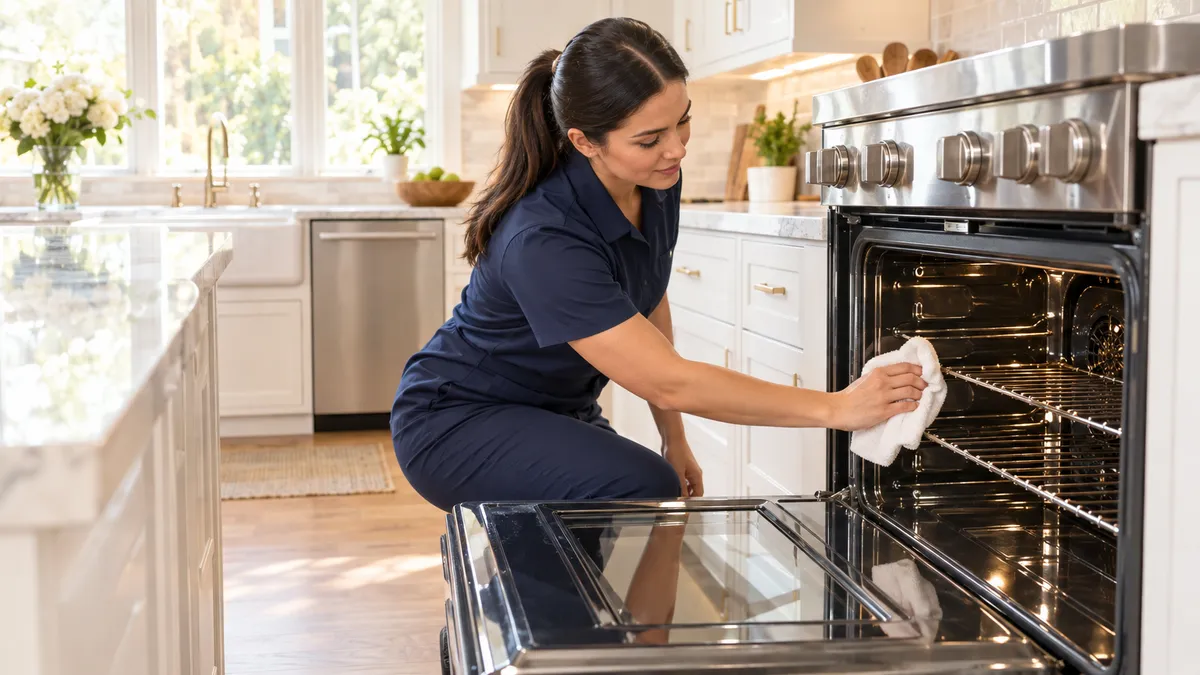
- Cleaning appliances inside and out — including the oven interior, stovetop, and microwave
- Cleaning inside the refrigerator — shelves, drawers, and door compartments
- Degreasing the range hood and stovetop grates
- Wiping down cabinet exteriors and, where applicable, the interiors
- Scrubbing the sink, faucet, and surrounding areas
- Cleaning backsplash tiles and countertop edges
- Wiping down small appliances
- Mopping and cleaning the floor, including edges and corners
Bathrooms
Bathrooms require detailed sanitization to remove bacteria, soap residue, and mineral buildup — all of which accumulate quickly in high-moisture environments.
- Scrubbing the shower, tub, and tile — including grout lines
- Cleaning and disinfecting the toilet inside and out
- Wiping down and polishing faucets, fixtures, and mirrors
- Cleaning cabinet exteriors and vanity surfaces
- Washing or wiping down the shower curtain or door tracks
- Descaling mineral buildup from faucets and showerheads where applicable
- Sanitizing light switches, towel bars, and door handles
- Mopping floors and cleaning baseboards
Bedrooms
Bedrooms are cleaned from top to bottom to improve both comfort and indoor air quality. Dust tends to settle in layers in these spaces, especially on surfaces that don't get touched regularly.
- Dusting ceiling fans, light fixtures, and vents
- Wiping down blinds and windowsills
- Cleaning baseboards and door frames
- Dusting furniture surfaces, shelves, and décor
- Vacuuming under and around furniture where accessible
- Vacuuming or cleaning upholstered surfaces
- Sanitizing light switches and door handles
Living Room and Common Areas
High-traffic living spaces collect dust quickly — especially on upholstery, shelving, and around electronics.
- Dusting from top to bottom — ceiling fans, vents, and light fixtures first
- Cleaning window interiors, sills, and blind slats
- Wiping down walls, trim, and baseboards
- Vacuuming upholstered furniture and cushions
- Dusting shelving, décor, and electronics
- Vacuuming and mopping all floor surfaces, including under furniture where accessible
Hallways, Entryways, and Laundry Areas
These spaces are easy to overlook but are part of a thorough deep clean. A complete service typically includes dusting baseboards, wiping doors and trim, cleaning light switches, and removing cobwebs. Laundry areas receive attention too — wiping down the washer and dryer exteriors, cleaning shelving, and vacuuming or mopping the floor.
When Is the Right Time to Book a Professional Deep Clean?
This is one of the most common questions homeowners ask — and the honest answer is: more often than most people realize. Here are the situations where a deep clean makes the most sense.
Before Starting a Recurring Cleaning Schedule
If you're setting up regular professional cleaning for the first time, a deep clean is the ideal starting point. It establishes a thorough baseline so that ongoing maintenance visits can keep things consistently clean rather than playing catch-up every visit.
After Moving In or Out
Whether you're moving into a new home or preparing to hand one over, a deep clean ensures every surface — inside cabinets, behind appliances, and throughout every room — is genuinely clean and ready for its next chapter.
Seasonally — Especially Spring and Fall
Seasonal transitions are a natural time to reset. Spring cleaning has always been a tradition for a reason — it clears out the buildup of winter. Fall is equally important: as homes close up for the cooler months, starting the season with a deep clean helps reduce indoor dust, allergens, and accumulated grime before you're spending more time indoors.
Before or After a Major Event
Hosting a holiday gathering, a family event, or overnight guests? A deep clean before the event ensures your home is at its best. After a large gathering, a deep clean helps restore things to normal quickly and thoroughly.
When Regular Cleaning No Longer Feels Like Enough
Sometimes a home simply reaches a point where a standard cleaning visit isn't catching everything. If you notice lingering odors, visible buildup in hard-to-reach spots, or surfaces that always seem to need more attention, it's a reliable signal that a deep clean is overdue.
After Renovations or Construction Work
Construction dust is fine, pervasive, and settles into places you'd never expect. After any renovation — no matter how small — a thorough post-construction clean removes particles from surfaces, vents, and fixtures throughout the affected space.
How Often Should You Deep Clean?
For most households, once or twice a year covers it well. Homes with pets, young children, or higher foot traffic may benefit from more frequent deep cleans — closer to every three to four months. The right frequency depends on how your home is used and how much maintenance happens in between.
If you're on a regular professional cleaning schedule, your cleaner can help you gauge when it's time for the next deep clean based on how your home is holding up.
What to Expect When You Book
A professional deep clean takes more time than a standard visit — naturally, because it covers significantly more. The duration depends on the size of your home and its current condition. Being home during the cleaning is entirely optional; many homeowners simply provide access and return to a freshly transformed space.
Before your appointment, it helps to declutter surfaces where possible. The cleaning team can work more efficiently when counters and floors are clear — meaning more time focused on the deep-cleaning tasks that actually require skilled attention.
Ready to Schedule a Deep Clean in the Capital Region?
The Dust Busters provides professional deep cleaning services for homes throughout the Capital Region — including Albany, Clifton Park, Colonie, Latham, Loudonville, Niskayuna, and surrounding communities. Our team handles the hard-to-reach spots, the built-up grime, and the details that make a real difference when a home needs more than a surface clean.
Whether you're starting fresh, preparing for the holidays, or simply overdue for a thorough reset, we're here to help.
Request a quote from The Dust Busters and let us know what your home needs. We'll take it from there.
